AT A GLANCE
Stingrays are fish related to sharks, with flattened bodies and broad pectoral fins. Many bottom-dwelling rays are adapted to moving over sand, breathing while resting and finding food close to the seabed.
- Animal group
- Cartilaginous fish
- Look for
- Fin movement, eyes and spiracles
- At the lagoon
- Ask your guide about each ray
A body made for water
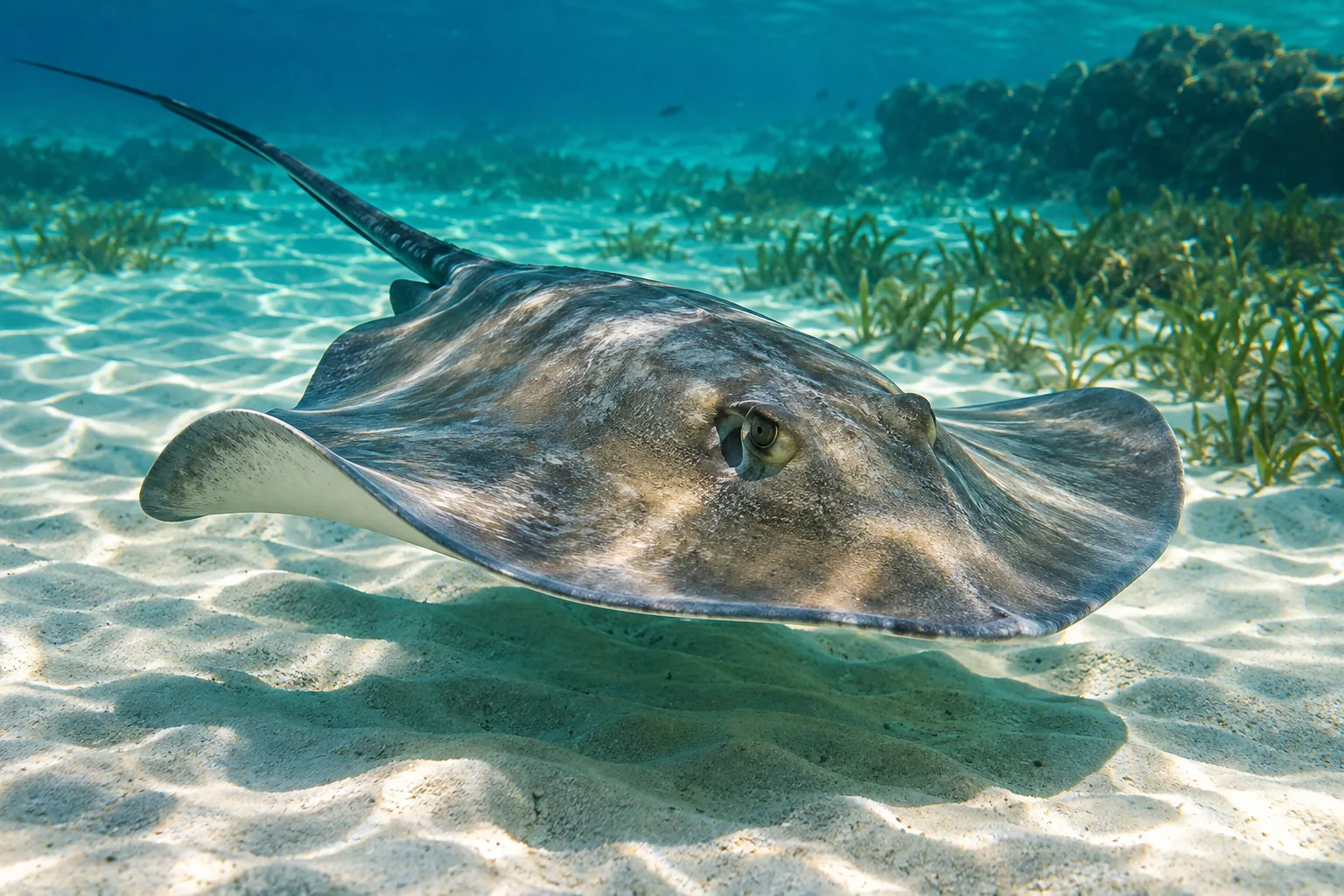
Watch a ray move and its shape begins to make sense. The broad disc is formed by enlarged pectoral fins, while the flattened body allows many rays to travel close to the seabed. Rays and sharks belong to the cartilaginous fishes: their skeletons are made of cartilage rather than the bony framework of most familiar fish.
“Ray” describes a wider group than “stingray.” The Florida Museum’s guide includes animals such as manta rays, electric rays and sawfishes within that broader family of forms. Not every ray has the same body shape, way of moving or feeding habit.
That variety is a reason to look carefully before giving an animal a species name. A common name or a passing glimpse is not always enough for a reliable identification.
Eyes above, a mouth below
For many bottom-dwelling rays, the eyes and breathing openings called spiracles are on top of the head. The mouth is underneath. This arrangement helps a ray take in water while resting close to, or partly covered by, the seabed, and places the mouth near the food it searches for.
The Florida Museum describes southern stingrays as foragers that use senses including smell, touch and electroreception to find prey such as crustaceans and other bottom-dwelling animals. Electroreception means detecting electrical signals; it is one of the ways their underwater world differs from ours.
These are general biological examples, not a species identification for the animals at Stingray Lagoon. Ask the team which rays you are meeting and what they can tell you about them.
Watch with a little more curiosity
Instead of trying to remember a long list of facts, choose three things to notice during an encounter. Watch the edge of a fin as the ray changes direction. Look at how the body moves relative to the sandy bottom. Notice what changes when the guide begins a feeding interaction.
Then ask a question about what you actually saw. Was that a turn, a pause or a response to food? Does this ray usually approach in the same way? Your guide can connect the moment in front of you to their experience of the individual animal.
Give yourself time to observe before reaching for a camera. A short, attentive look can make the photographs you take afterward much more meaningful.
Meet individuals, not a misconception
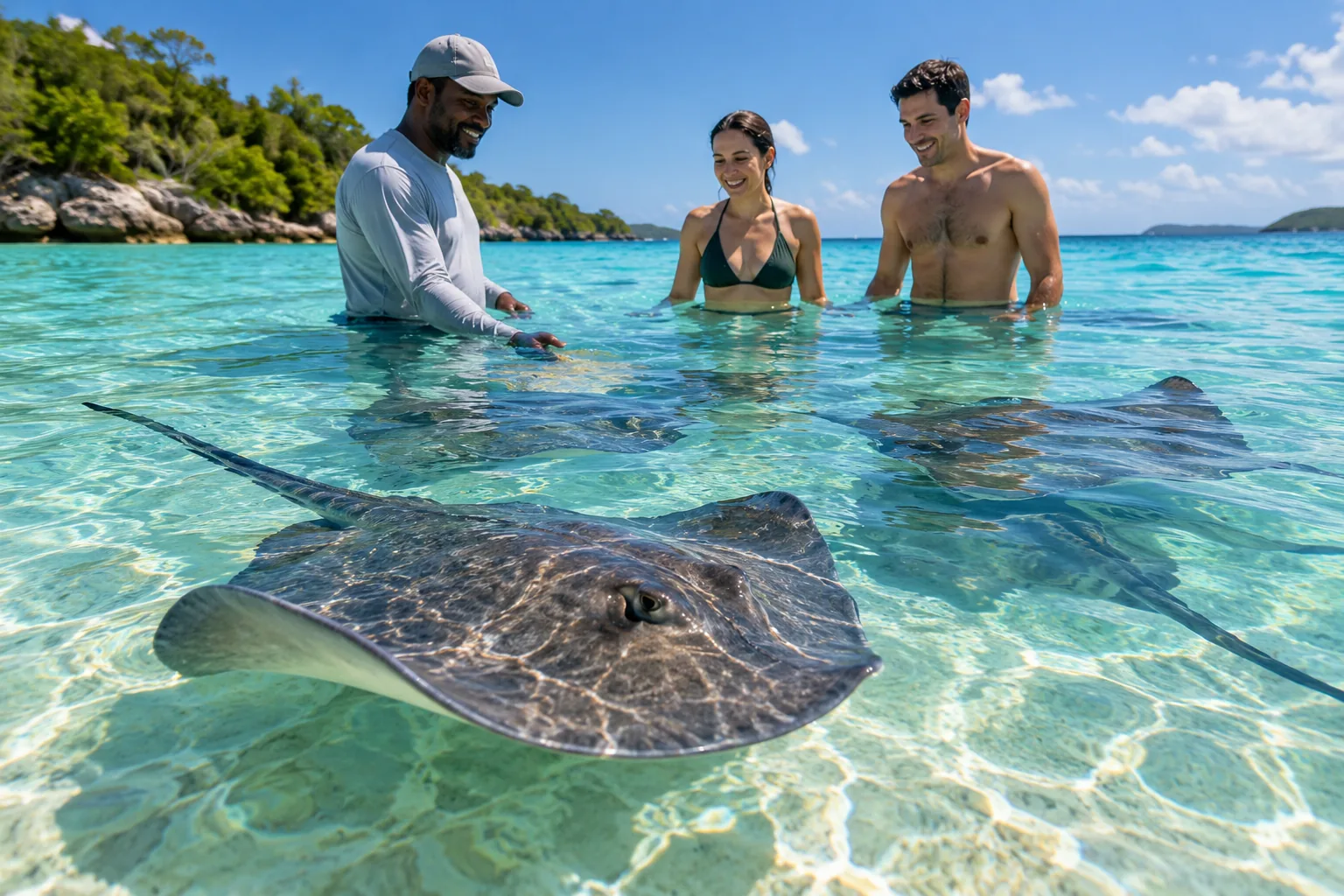
At Stingray Lagoon, the one-hour guided encounter is built around getting to know the rays through observation and team-led interaction. We want visitors to leave with curiosity, confidence and a sense of the animals’ individual character.
Learning about a ray does not require treating every encounter the same way. Follow your guide’s instructions in the lagoon, and observe wild marine animals without touching or feeding them when you explore elsewhere. Familiarity with one managed setting should not become an assumption about an unfamiliar animal.
Read what to expect at your first encounter, or explore our stingray story before your visit. You will arrive with better questions—and plenty left to discover.
Your questions, answered.
Are stingrays a type of fish?
Yes. Stingrays are cartilaginous fish, related to sharks. Their broad, flattened shape is different from many familiar fish, but they are not mammals.
Does this guide identify the species at Stingray Lagoon?
No. This article introduces general ray biology and clearly labelled examples. Ask the encounter team for species information about the rays you meet.
Sources & further reading
Natural history and destination background are linked below. For our activities, the experience pages contain the current published details. Confirm schedules and arrangements for your travel date. How we prepare these guides.
MAKE IT PART OF YOUR VISIT
Stingray Encounter
Meet and feed stingrays at Carambola Beach Club, St. Kitts. A one-hour encounter from US$99, with direct booking and shore excursions with return transport.
Explore this experience