AT A GLANCE
Nurse sharks are bottom-dwelling sharks often seen resting during the day. At Stingray Lagoon, optional nurse shark observation takes place in a separate area from the stingray encounter.
- In nature
- Often resting by day, active at night
- Notice
- Rounded fins, long tail and small barbels
- At the lagoon
- Separate from the ray encounter
A different shark story
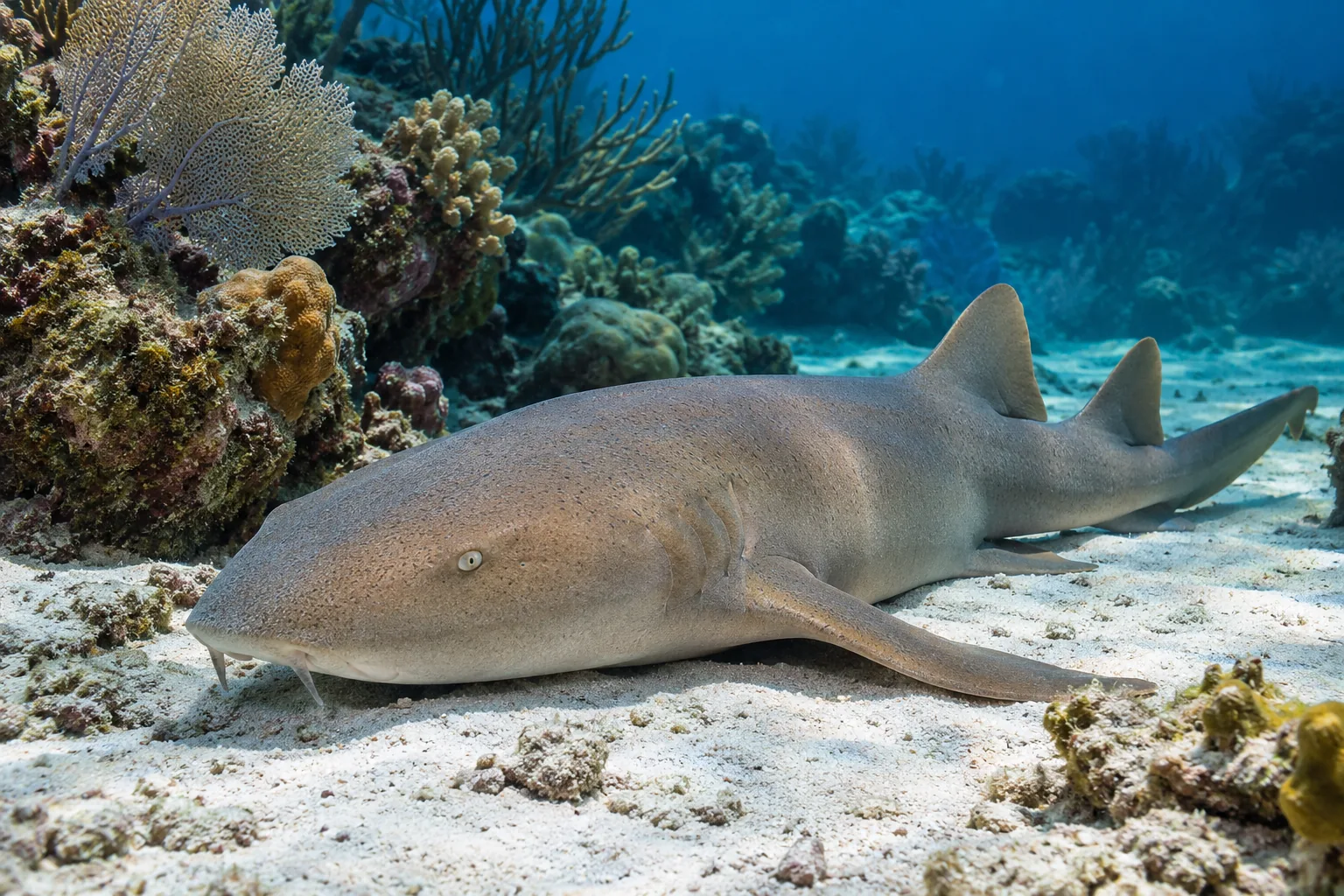
A nurse shark resting on the seabed offers a very different picture from the fast-moving silhouette many people associate with sharks. The Florida Museum describes nurse sharks as bottom dwellers, generally yellowish-tan to dark brown, that are active at night and often rest by day.
Their rounded dorsal fins, long tail and small barbels near the mouth help distinguish them. Barbels are sensory structures: a useful detail to notice when thinking about an animal that searches close to the seafloor.
Nurse sharks feed on animals including crustaceans and mollusks. They may return to favoured resting places and sometimes rest near others. A quiet moment on the bottom is therefore part of their natural history, not necessarily a sign that there is nothing to observe.
Look for the small details
Start by looking at the outline of the animal rather than waiting for movement. Notice the shape of the head, the placement of the fins and how the body rests against its surroundings. If it moves, watch how its shape changes as it turns.
Ask your guide what you are seeing. Is this a usual resting place? Which features help identify a nurse shark? What should observers give the animal room to do? Questions tied to the animal in front of you make the encounter more useful than trying to collect dramatic moments.
Observation works best when the animal can carry on without being disturbed. Give it space and follow the team’s instructions. Calm behaviour is an invitation to watch thoughtfully, not to assume touching is appropriate.
Nurse sharks at Stingray Lagoon
Our main activity is the guided stingray encounter. After meeting the rays, guests can choose optional snorkeling or nurse shark observation. The nurse sharks are in a separate area from the ray encounter, so their presence does not mean the stingray interaction takes place among sharks.
The published activity lasts one hour, including the welcome, briefing, orientation, gear fitting and the encounter sequence. Optional activities fit within that visit. Ask the team how the observation is arranged on your day and what participation requirements apply.
If you are interested in the rays but unsure about sharks, say so. Your visit can be approached with questions and clear expectations. You do not need to treat every optional element as something you must do.
Make understanding part of the souvenir
A photograph may help you remember the shape of an animal. A small piece of understanding helps you remember why that shape matters. Knowing that a nurse shark spends much of the day resting changes the way you look at an apparently still scene.
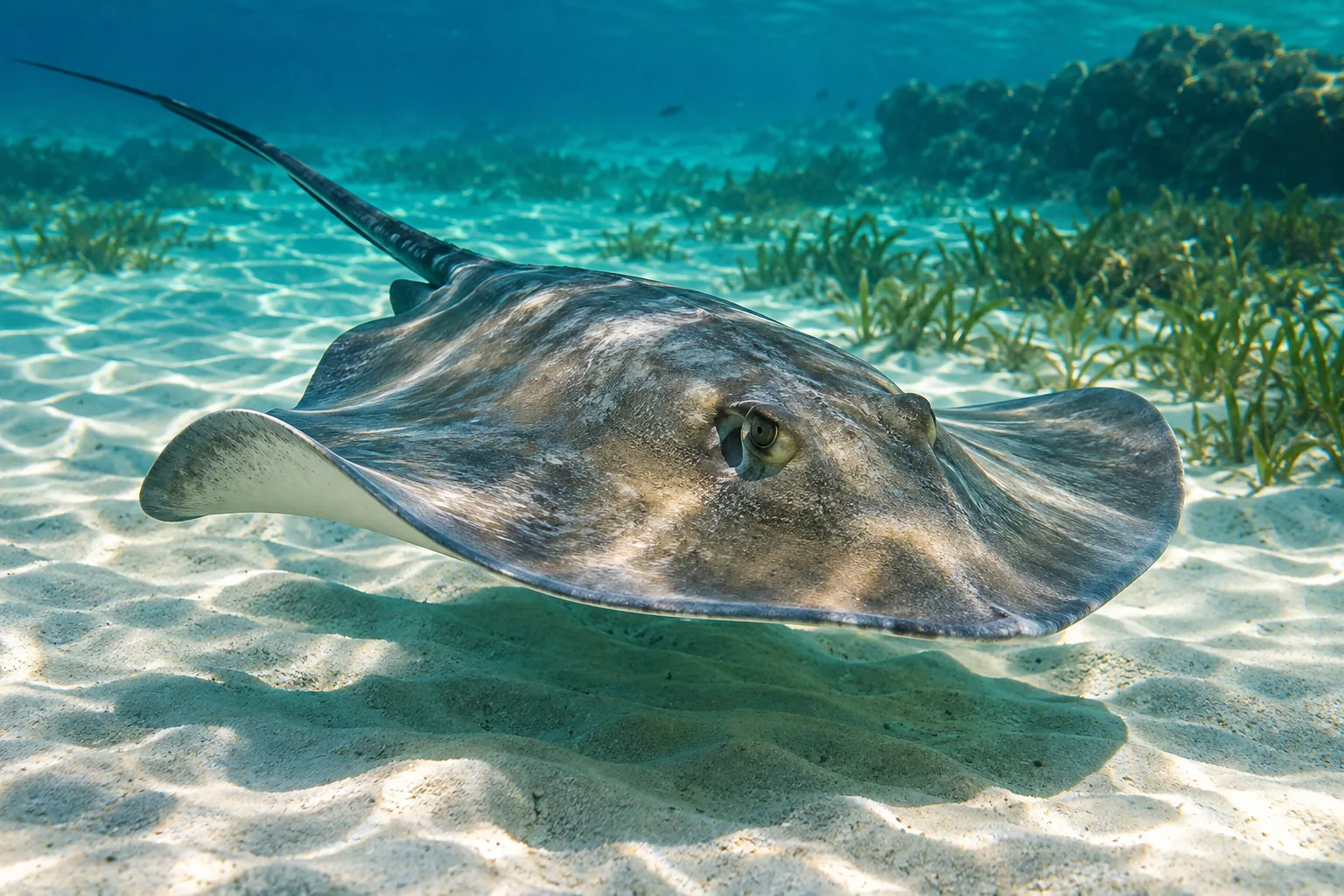
Try leaving with one thing you noticed and one question you would like to explore next. You could compare the nurse shark’s body with the broad disc of a stingray, or learn more about the seabed habitats that support both.
Our stingray facts guide makes a useful next read, while thoughtful marine encounters explains the difference between a managed activity and observing wildlife elsewhere.
Your questions, answered.
Are the sharks in the same area as the stingray encounter?
No. Nurse sharks are in a separate area. Observation is an optional part of the visit after meeting the rays.
Does the activity include touching or feeding nurse sharks?
The published itinerary describes nurse shark observation, not a shark handling or feeding activity. Follow the team’s instructions about the observation area.
Sources & further reading
Natural history and destination background are linked below. For our activities, the experience pages contain the current published details. Confirm schedules and arrangements for your travel date. How we prepare these guides.
MAKE IT PART OF YOUR VISIT
Stingray Encounter
Meet and feed stingrays at Carambola Beach Club, St. Kitts. A one-hour encounter from US$99, with direct booking and shore excursions with return transport.
Explore this experience