AT A GLANCE
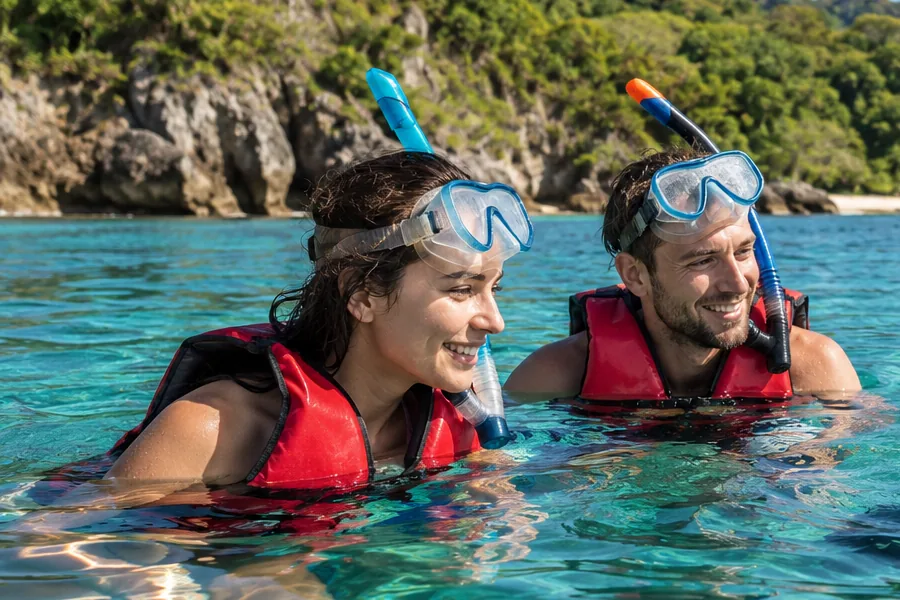
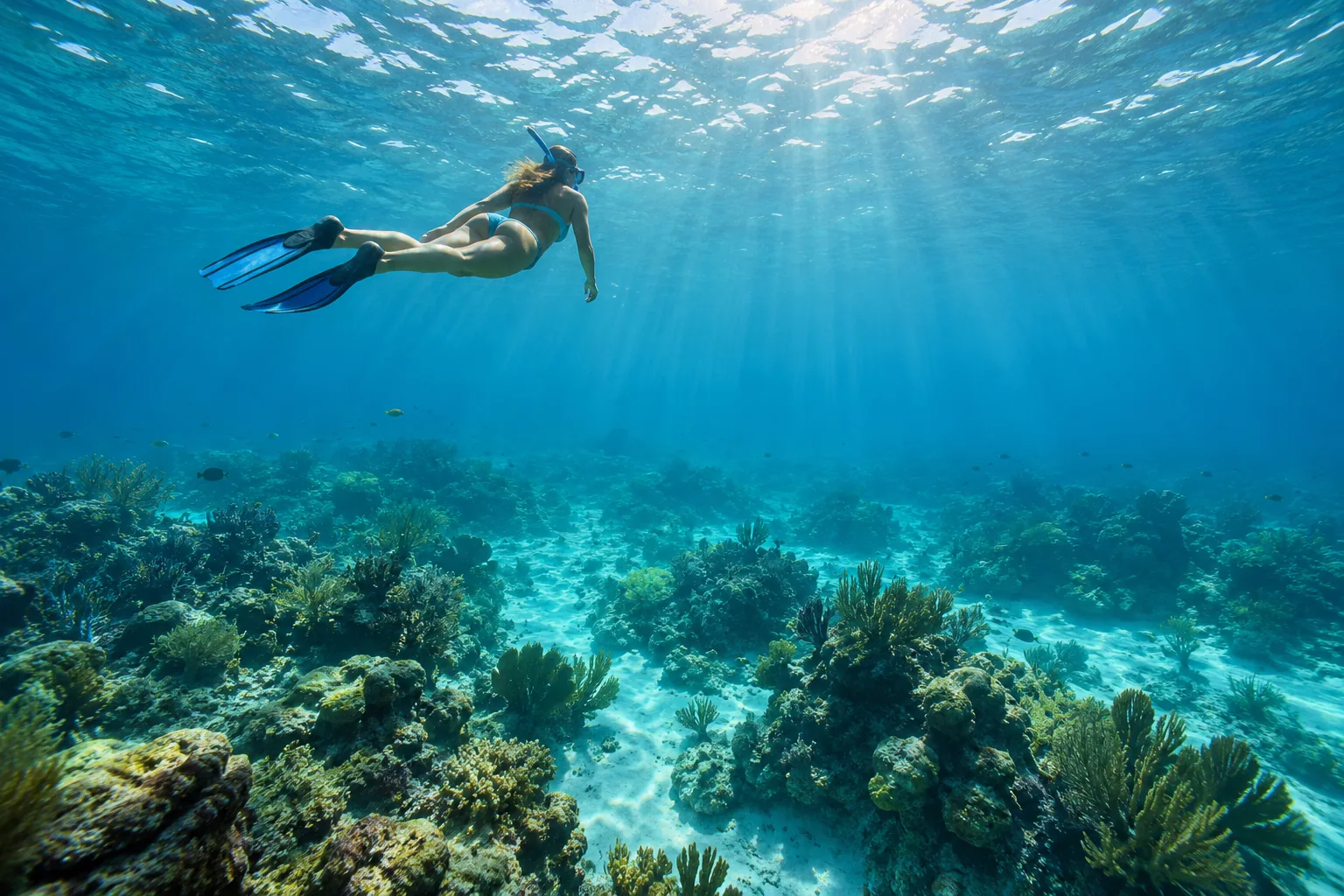
A coral reef is a living habitat, not simply a colourful backdrop. Start by observing shapes, movement and the spaces between them, while keeping your body and equipment clear of the reef.
- A useful first fact
- Corals are animals
- Best approach
- Observe without touching
- Remember
- Wildlife sightings vary
A living landscape
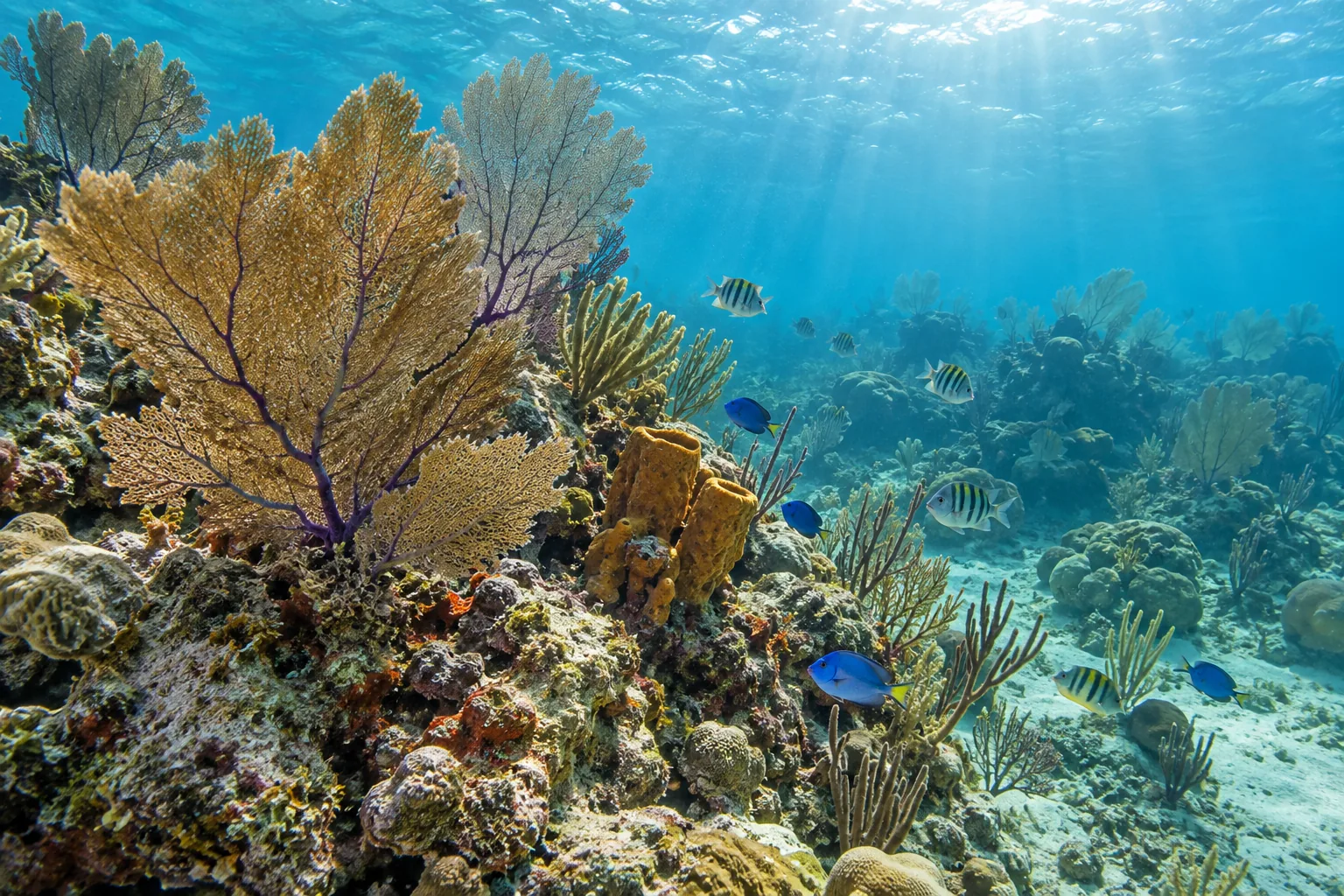
Corals can look like rocks, branches or underwater plants, but they are animals. NOAA explains that many reef-building corals live in partnership with tiny algae inside their tissues. The coral provides a home, while the algae contribute food through photosynthesis. That relationship helps explain why the reef is more than its visible shape.
A reef scene also contains open water, sand and countless spaces around its structures. Rather than trying to name everything immediately, notice how these different parts fit together. Which areas hold your attention? Where does movement appear and disappear?
Looking this way makes an unfamiliar underwater scene easier to understand. You are reading a habitat before trying to turn it into a species checklist.
Three ways to look closer
Look for shapes. Describe what you see in ordinary language: a fan, a branching form, a rounded structure or a patch of sand. A clear description is a good starting point for asking a guide what it is.
Look for movement. Watch how a fish travels through a space or how the scene changes as a group passes. Stay at a comfortable viewing distance rather than following an animal away from your group.
Look for relationships. Notice where an animal pauses and what surrounds it. A question such as “Why is it staying there?” often opens a more interesting conversation than asking only for a name.
You do not need to identify every fish to have a rewarding snorkel. A few observations that you can remember and describe are enough.
Give the reef room
NOAA’s reef guidance recommends avoiding contact with corals and wildlife and preventing disturbance to the habitat. Keep fins, hands and dangling equipment clear. Do not stand on coral to adjust a mask or make a photograph; ask your guide where an appropriate rest or exit point is.
Choose a viewing position that suits your ability and the conditions. If a photograph would require approaching too closely, let it go. The reef and its animals should be able to continue without being rearranged for your picture.
Keep your belongings secure and take rubbish back with you. The habits that make a visit thoughtful are usually small, repeatable actions rather than elaborate equipment.
Take the curiosity into your next visit
This guide introduces reef observation across the Caribbean. It is not a list of species guaranteed at Carambola, and its editorial image is not a record of a particular reef or a promised sighting. Conditions, location and the activity you choose determine what you may see.
Stingray Lagoon’s signature experience centres on rays in a sheltered lagoon. Optional snorkeling is part of the published visit sequence, but a guided ray encounter should not be assumed to include an open-water reef tour. Ask the team about the actual snorkeling area and what is suitable on the day.
If you are new to snorkeling, start with our preparation guide. If you are especially interested in the animals at the lagoon, our stingray facts and nurse shark guide will help you arrive with good questions.
Your questions, answered.
Are corals plants?
No. Corals are animals. Many reef-building corals have a close relationship with microscopic algae, which can make the biology less obvious at first glance.
Does the stingray encounter include an open-water reef tour?
An open-water reef tour is not listed as an inclusion. Ask the team about the optional snorkeling arrangement within the one-hour lagoon visit.
Sources & further reading
Natural history and destination background are linked below. For our activities, the experience pages contain the current published details. Confirm schedules and arrangements for your travel date. How we prepare these guides.
MAKE IT PART OF YOUR VISIT
Stingray Encounter
Meet and feed stingrays at Carambola Beach Club, St. Kitts. A one-hour encounter from US$99, with direct booking and shore excursions with return transport.
Explore this experience